


The Heroic Idun – The Nordic Plan – Can anyone be certain about an “overriding political objective"
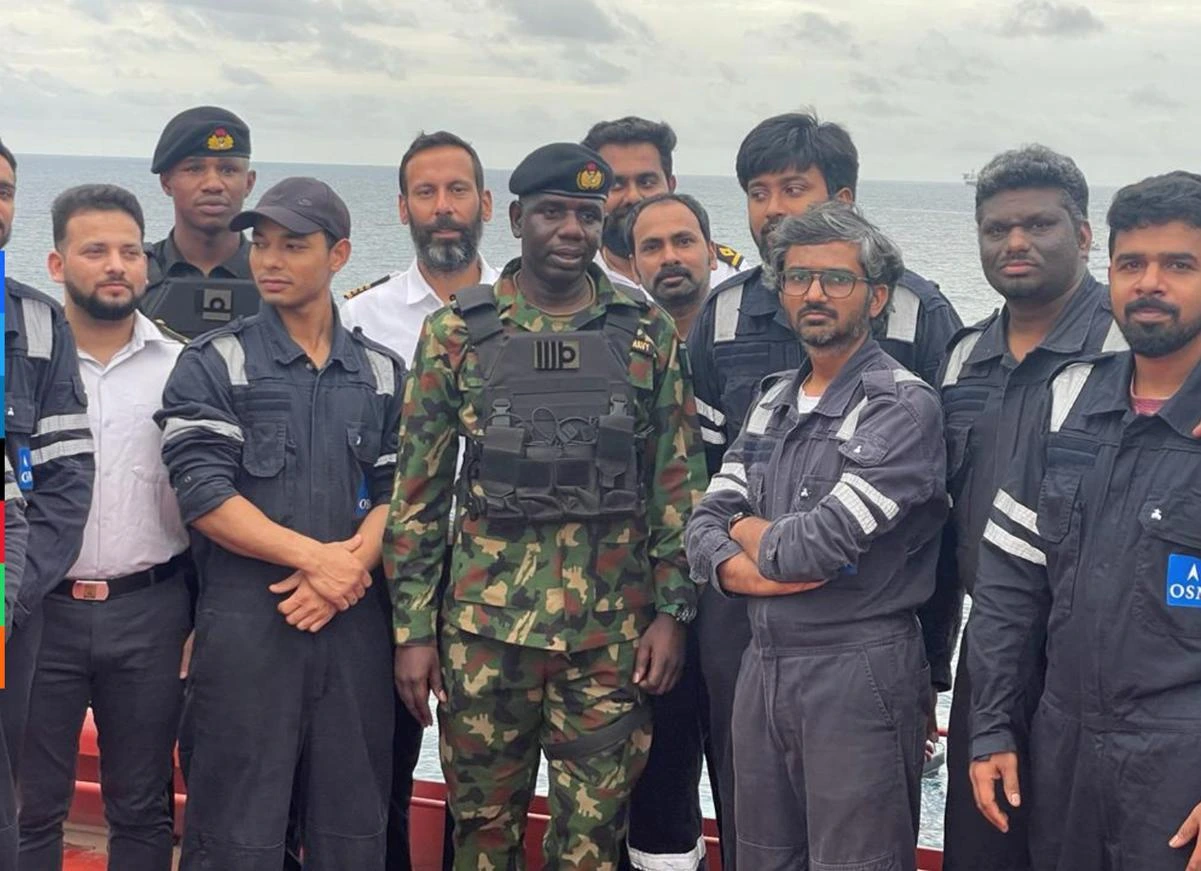
On the evening of 8th August 2022, the Heroic Idun, a Marshall Island flagged VLCC, found itself drifting off the Nigerian based Akpo FPSO waiting for orders to load a cargo of crude oil. Within a few short minutes, a misunderstanding with the Nigerian Navy would lead to an armed interdiction in international waters, an unlawful rendition by Nigerian special forces and a ten-month detention which ended with a US$15 million restitution payment. All of which had to be unpacked by a very distinguished Tribunal in Oslo as they determined whether the war risk insurers were liable for those losses under a war policy insured on the Nordic Plan.
The recent Final Award sets out why the Tribunal declined the owner's war risks claim, but raises more questions than it answers particularly about how the Nordic Plan conceptualises state behaviour in an increasingly volatile geopolitical landscape. There is little doubt that in the wake of prolific criminal hostage situations (by Somali pirates, etc.), we have taught capricious leaders and nations that crew and vessels have value. Increasingly, assets are being seized to maximise political leverage. Ship owners need some certainty about how their policies will be applied when their vessels are detained by a capricious or vengeful State.
The Heroic Idun was a manifestation of that strain of political coercion and reputational posturing. In reaching their conclusion, the Tribunal arguably adhered to a narrow, legacy conception of what constitutes an “overriding political objective” shaped by post war assumptions rather than present day realities. In fairness, they may have felt that the nature of how the Nordic Plan operates prevented them from doing this. As Thommessen (who acted for the war risk underwriters) have said in their summary of the case “…the Nordic Plan is an agreed document. Revision should therefore be done through, precisely,[sic] revision of the Nordic Plan itself, and not expansive interpretation.[1]” But that raises the question as to whether an owner, insured under an all-risks policy, engaged in trade in parts of the world where armed interdictions can happen, would believe he is not insured in a case like this, even where the country he is detained in is not overtly involved in war-like hostilities.
Arguably, the bar to proving what constitutes an overriding political objective is too high. The Award seems to put a construction on the Plan that where the interdiction (however egregious) is cloaked in a “law enforcement wrapper” then it is likely that a claim will fail. From (an admittedly) English lawyer’s perspective that approach does not seem to reflect the Commentary’s guidance that political motive takes precedence over how the state frames or labels the action.[2] Further, as is discussed below the burden of proof under the Nordic Plan works against the insured in a way it doesn’t under the ITC clauses.
Notwithstanding that, this article considers whether an opportunity was missed to align the Nordic Plan with the realities of present geopolitical coercion.
Background – “Mayday” to Interdiction
The Heroic Idun was scheduled to load at the Akpo terminal offshore Nigeria. Following confusion about the vessel's loading instructions and perceived irregularities in documentation, the vessel was drifting waiting further orders. Part of the pre-loading protocols and permissions is the need for Naval clearance. That had not yet been given. A Nigerian Naval patrol craft approached in darkness and suspecting oil theft or similar irregularity, asked the vessel to accompany it to the Bonny River some 70 miles to the north. This was a deeply unattractive offer in an area known for piracy, where the master could not with certainty, determine if the patrol craft was genuine. After some toing and froing and input from the managers a decision was made to head offshore. The captain of the patrol craft upped the aggression. Objectively, both captains were doing their best and following their own orders and operating procedures but they were now about to compound the misunderstanding between them. Believing itself under attack the master issued a mayday and (fatally as it turned out) suggested that this was a “possible piracy attack”. The Nigerian Navy took this personally and much of what happened over the coming months had as its origin, this perceived attack on their reputation.
Local security (covering oil theft and piracy) as between the littoral states in West Africa is regulated by the Yaoundé Code of Conduct but the immediate request to detain the vessel by the Nigerian navy to their counterparts in Equatorial Guinea, was by Whatsapp. It is a notable feature of the case that so much of what was done in terms of detaining the vessel and crew, etc., was done without any judicial oversight. Having received that request, the Equatorial Guinean Navy approached and under threat of force (and with the enthusiastic support and likely direction of the Vice President), the Heroic Idun surrendered itself to them. The vessel was escorted to Malabo and the crew divided with some held ashore. There was no formal arrest and no local Court involvement and the fact that it was quickly established that the vessel had no oil on board meant any suggestion of smuggling should have fallen away. Instead, the crew were subject to investigation by Nigerian naval officers and the public messaging from Nigeria was that the vessel would be returned to Nigeria.
In the absence of any extradition treaty or indeed mutual assistance agreement, this should not have been possible. Yet Nigerian Special Forces were allowed to board the vessel in Equatorial Guinea and again the master and crew were forced at gun point to sail to Nigeria. It is difficult to see why that was not an unlawful rendition. Indeed, it was subsequently disclosed that because of criminal charges against the vessel (which is a peculiarity of Nigerian law) and all the crew, an application for extradition had been filed in the Federal Court in Nigeria. That was not served on the crew who ordinarily would have expected to have been able to challenge that in the EG courts. An action was started in the Federal Court in Nigeria seeking a declaration that this rendition was in breach of the crew’s constitutional rights[3]. The extradition was contrived to allow give EG political cover in what they were conspiring to do. It certainly does not stand up to scrutiny on how ships and crew should be dealt with under international law.
On arrival in Nigeria, the vessel and men were formally charged with serious offences related to the lifting of oil without a license and under the local anti-Piracy legislation. If found guilty, the penalties included lengthy prison sentences for the crew and the forfeiture of the ship.
Recognising the weakness of the case the Nigerian AG (who ironically is now facing corruption charges – unrelated to this case) allowed the owners to go down the process of a formal plea bargain. This should have meant the original charges being replaced with less serious ones (against a plea of guilty) under legislation where the victim could expect some compensation. Here charges were dropped against the crew with only one being brought against the ship allowing for an administrative fine. Otherwise, no further criminal investigation took place. The Tribunal speculated that this was because the plea bargain process had been commenced[4]. That misunderstands basic criminal procedural law which means that from the moment the crew were arraigned then the State indicated that they were ready for trial which was fixed for early January. The sting in the tail was the fact that under the plea bargain the Navy (an organ of the state) became the “victim” of the crime and the release was only possible after its owners paid a USD 15 million “restitution,” and issued a public apology.
To the owners, this looked and felt that they were victims of political manoeuvring and something akin to state hostage-taking. To the insurers, the central issue was whether (in the words of Clause 2-9 (1) (b) the intervention was made “..for the furtherance of an overriding national or supranational political objective.” Ultimately, the Tribunal was satisfied that under the Nordic Plan, and when looked at objectively everything done arose from the original approach by the patrol craft was done in the name of law enforcement. Nothing after that mattered.
The Owners’ Claim and the Nordic Plan’s Framework
The owners submitted a claim under Clause 2-9(1)(b) of the Nordic Plan, which covers:
“capture at sea…..or similar interventions by a foreign State power, provided any such intervention is made for the furtherance of an overriding national or supranational political objective….”
They argued that, whatever the incident may have started as, the conduct acquired an overtly political character. As has been set out above, and in very general terms they relied on:
- The Nigerian Navy using force outside territorial waters.
- The transfer from Equatorial Guinea occurring without judicial process.
- The Vice President of Equatorial Guinea intervening directly, presumably with his own political imperatives.
- There was no formal investigation or prosecution.
- A payment was extract from owners to allow the release the vessel.
The Owners maintained that these acts were not mere law enforcement, but political coercion designed to demonstrate Nigerian authority in the Gulf of Guinea and to save face for the Navy after a public embarrassment. They were considered in detail by the Tribunal.
The Tribunal’s Approach – Correct in Principle
The Award is lengthy and the Tribunal took on an exhaustive analysis of the facts. But the focus of so much of the analysis centred on what could constitute the furtherance of an overriding political objective. At paragraph 1270 of the Award the Tribunal accepted:
“An intervention starting as a matter of law enforcement ….may acquire a political character…”
Further at paragraph 1278, several factors are set out that could indicate that an intervention was for the “furtherance of a political objectives.” That included where the intervention:
“Exceeds what would be considered necessary for the purpose of law enforcement; for example, if its duration is longer than usual by the standards of the legal system in question, or if the authorities resorted to violence against the master or crew in connection with the intervention”.
The Tribunal appeared to emphasise that motivation and not merely the form of intervention is the key, and that a substance-over-form analysis must be applied.
There were then five key stages that were analysed for political motive:
i) The encounter with the Nigerian Navy on 8 August.
ii) The capture of the vessel on 12 August by the EG navy under threat of being fired upon.
iii) The detainment in Equatorial Guinea.
iv) The transfer back to Nigeria on 7 November.
v) The detention in Nigeria until June 2025.
In each instance, the Tribunal found that the action of the authorities of both countries was consistent with the original law enforcement activity of the Nigerian navy. This was even the case where the actions of EG in interdicting the vessel were found to be prima facie contrary to international law[5].
But it was the transfer of the vessel back to Nigeria where things went seriously awry. This transfer was done in the port in EG where the vessel was handed over to Nigerian Special Forces who boarded at gun point. That is extraordinary and sidesteps all manner of Conventions on for example, ship arrests. The Tribunal considered the process that Nigeria put in place to “extradite” the vessel and crew bearing in mind an absence of any formal treaty between the countries. Nigeria issued arrest warrants and a request for extradition. Usually (if a treaty allowed) that would be considered by EG who would issue arrest warrants and allow the crew to be heard in the local court. This did not happen. The Nigerian arrest warrants could only be served in Nigeria. But the Tribunal found:
There is no evidence that the charges ever were served on the crew and the Vessel while they were in Equatorial Guinea. Contrary to the Claimant’s submission, the Tribunal considers it would be contrary to the purpose of the measure if the validity of the application for an arrest depends on whether it was served on the crew and the Vessel.
That is a remarkable conclusion and inverts what should have happened. Without service and judicial oversight, the act is not extradition it is rendition. That is why an action was started in the Federal Court in Abuja claiming that the crew’s constitutional rights had been ignored. This is where an English Court looking at this would have been much more sceptical of the process.
Further, on arrival in Nigeria the crew were immediately arraigned. This signalled that the State was ready for trial. There could be no further investigation and fatally for the prosecuting authorities the men had never been questioned under caution. Now they could not be. The criminal case against them was weak but there could be no guarantee (particularly when you consider how the extradition application was dealt with) that a Federal Judge would not find the Master or the ship guilty leading to a lengthy prison sentence and the forfeiture of the vessel. It was in the interests of both Nigeria and the owners to find away to avoid the trial and the scrutiny on the Navy as to whether they had acted unconstitutionally. Accordingly, and against the wishes of the Navy, the AG agreed to enter a plea bargain arrangement.
The Tribunal speculated that there was no further investigation in Nigeria because it had been done abroad. But that investigation was done by the Navy who have no powers of prosecution. The final restitution payment was set at an “exorbitant” US$15m.
Excess of Jurisdiction and Burden of Proof
As set out above, the Tribunal sets out what the English would say was an “excess of jurisdiction” test to help determine whether a detention or capture was political.
The approach of the Tribunal was to assess whether each action could be said to be a law enforcement function. Having concluded that it was, it made clear that at that point the burden of proving whether the act was in the furtherance of a political motive fell to the owners. This is not easy in any state let alone countries in West Africa or the Middle East. Under the ITC clauses for example, these arguments usually come up when in similar cases the insurers are relying on the “customs” exception. But the burden is on the insurers to prove this and if the underlying Court or authority has acted in excess of its jurisdiction then there is good authority that the insurers cannot rely on the exception. Further, the cases often involve drugs where a ship has been confiscated and it is the action of the Court that is considered in the context of excess jurisdiction.
In this case and despite an Award running to over 250 pages, you are left with the impression that the Tribunal never stood back and asked themselves whether what happened in the round over the ten months exceeded what could be regarded as “law enforcement”. They simply focussed on the one example that their test had referred to namely the duration of the investigation. They considered whether the duration of the criminal investigation “…exceeded what would be typical within the Nigerian legal system”. That makes no sense because there was no criminal investigation in Nigeria.
The case was presented by owners through the prism of the actions and deeds of the Navy whose stated aim was to the punish the owners and who were allowed to use the law to do so. It is that arm of the state that acted in excess of its jurisdiction.
But standing back and make that the focal point:
The Tribunal accepted that the interdiction at sea by EG was prima facie unlawful. The extradition process took place with no judicial oversight and no recourse to the local courts. Indeed, it was simply not how extradition works. Arrest warrants were never served. The rendition of the ship and crew to Nigeria was unlawful. So, two examples of where international law was not followed. The Yaoundé Code does not and cannot override the principle and protections given under UNCLOS. The plea bargain arrangement was contrived to allow a payment of restitution to the state which was negotiated with the Navy who were said to be the “victim” of the crime. There was no criminal investigation. At no time for example, were the crew interviewed under caution.
Then ask whether these steps exceeded what was required for law enforcement. If they did, then it is difficult to understand why did not indicate a political objective as the Tribunal suggested. An owner can never know what really goes on between governmental departments. The shipowner was divested of control of the vessel for ten months and whilst this case began as a lawful approach by the naval vessel on the night of August 8 it is difficult to conclude objectively, that it did not acquire a political character.
Was an opportunity missed?
The Nordic Plan is unusual because as matter of Norwegian law its interpretation is guided by the Commentary which it is to be assumed is drafted in a way to give clear guidance as how to construe the clauses. It is apparent that the Tribunal struggled with identifying what was an overriding political objective. The Heroic Idun has no doubt raised that bar. It is not for me to presume to say whether it is right or should be re-visited but is policy wording that had its birth in the shadow of the war, still right in the modern age of geo-political interdictions and state hostage like activity.
The Tribunal mulled two military interventions, cross border rendition and executive involvement. It accepted the coercive nature of the detention and the multi-million dollar pay off and yet gave them no real weight and found that this could all be framed as law enforcement and in no way in excess of what the local law allowed.
Can a shipowner look at the risks their vessels are facing in the modern world and say with any certainty which of the myriad interdictions that take place by armed forces will be covered?
[1] The Heroic Idun case: No war risk cover for detenion as part of law enforcement - perceived piracy is not a war peril | Advokatfirmaet Thommessen
[2] That surely is the correct construction of the Commentary on Clause 2-9 1 (b) : “If an overriding national or supranational political objective is detected, it does not matter if the State power formally justifies the interventions with for example police or customs regulations….”
[3] A similar unlawful rendition of a British national had been subject to judicial criticism for a failure of due process Kenyan court declares Nnamdi Kanu’s rendition to Nigeria illegal... what to know
[4] Paragraph 1373
[5] Marshall Islands as the flag state has instigated proceedings against EG at ITLOS
Authors

Stephen Askins
Partner